
Floods are the most common natural disaster, yet standard homeowners insurance explicitly excludes flood damage. Without a separate flood insurance policy, a single rising water event can lead to devastating financial loss. Because most policies require a strict 30-day waiting period before taking effect, you cannot wait until a storm is in the forecast to get coverage. This guide explains your risks, your options, and how Redman & Company Insurance can help you secure the right protection before disaster strikes.
Does Homeowners Insurance Cover Flood Damage?
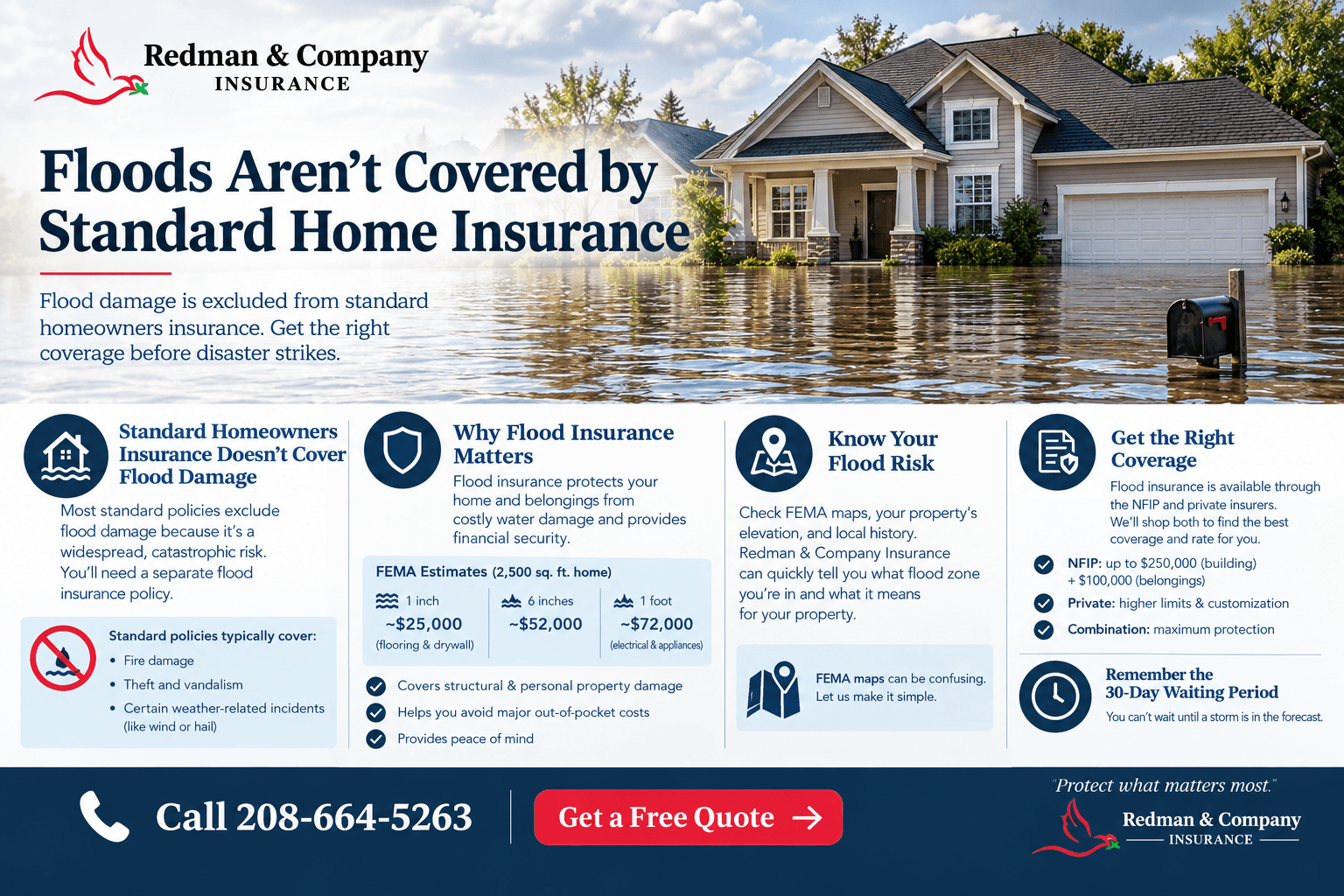
No, standard home insurance policies explicitly exclude flood damage. Insurers exclude floods because they cause widespread, catastrophic destruction that would make standard premiums unaffordable for the average homeowner.
Homeowners should be aware that standard policies typically cover:
- Fire damage
- Theft and vandalism
- Certain weather-related incidents (like wind or hail)
Floods require separate coverage due to the extensive, specialized risk they pose. Recognizing this limitation is vital for proper protection of your property.
Why is Flood Insurance Important?
Flood insurance is essential for homeowners, especially in flood-prone areas. Without it, repairs and replacement costs come entirely out of pocket.
According to data from the Federal Emergency Management Agency (FEMA) and the National Flood Insurance Program (NFIP), the financial impact of flooding scales rapidly. For an average 2,500-square-foot home, FEMA estimates the following damage costs:
- 1 inch of water: ~$25,000 (destroys flooring and requires drywall replacement)
- 6 inches of water: ~$52,000
- 1 foot of water: ~$72,000 (begins destroying electrical systems and major appliances)
Consider these critical points about flood insurance:
- Covers structural and personal property damage
- Provides essential financial security
- Helps you avoid major financial pitfalls
As climate change and land development increase flood risks, having proper insurance becomes even more crucial. Knowing you're covered provides peace of mind during stormy seasons.
How Can I Check My Home's Flood Risk?
Understanding your flood risk is vital in protecting your property. You can begin by consulting FEMA's online flood map tools, evaluating your property's elevation, and considering historical flood data in your area. Even if flood insurance isn't explicitly required by your mortgage company, you could still be at significant risk.
However, FEMA maps can be confusing to read. The team at Redman & Company Insurance can quickly run your address to tell you exactly what flood zone you are in and explain what that means for your property.
Where Can I Buy Flood Insurance?
Flood insurance is available through both the federally backed National Flood Insurance Program (NFIP) and private insurance providers.
Consider these options:
- National Flood Insurance Program (NFIP): This is a widely accessible government program providing standard policies. However, it has strict limits: coverage is capped at $250,000 for your building and $100,000 for your belongings. It also enforces a strict 30-day waiting period before coverage begins.
- Private Insurers: Private policies offer more customizable options. If your home would cost more than $250,000 to rebuild, a private insurer or an excess flood policy can provide the higher limits you need to be fully protected.
- Combination: Some homeowners use a combination of both for comprehensive protection.
Does Renters Insurance Cover Flood Damage?
No, standard renters insurance explicitly excludes flood damage. Furthermore, renters often assume that their landlord's insurance will cover their belongings in a flood. This is almost never the case, as the landlord's policy typically only covers the building structure itself. To protect your personal property, furniture, and electronics, you must obtain a separate flood insurance policy for renters.
How Do I Get Flood Insurance Quotes and Choose Coverage?
Obtaining flood insurance quotes is a vital step in securing the right coverage. Quotes can vary based on factors like your location, property elevation, and overall risk level.
Because we are an independent agency, Redman & Company Insurance can shop both the NFIP and private flood markets for you to find the most robust coverage at the lowest rate. We will help you consider coverage limits for your structure and evaluate your belongings to ensure you have sufficient protection.
Conclusion: Securing Your Peace of Mind
Understanding your insurance needs in flood-prone areas is crucial. Many homeowners overlook the importance of separate flood insurance, risking financial distress when disasters strike. Assess your risk, evaluate your options, and regularly update your policies.
Get the coverage you need to protect what matters most. Remember, because of the standard 30-day waiting period, you cannot wait until rising water puts your home and belongings at risk. Call Redman & Company Insurance today at 208-664-5263 or reach out online to learn more about your flood insurance options and get a free quote.