Choosing a valuation method for your classic car can mean the difference between adequately funding a replacement or facing a financial shortfall after a claim. While "agreed value" and "stated value" sound similar, they may operate very differently in the event of a total loss. Understanding this difference is an important step in helping protect your investment.
What is Agreed Value?
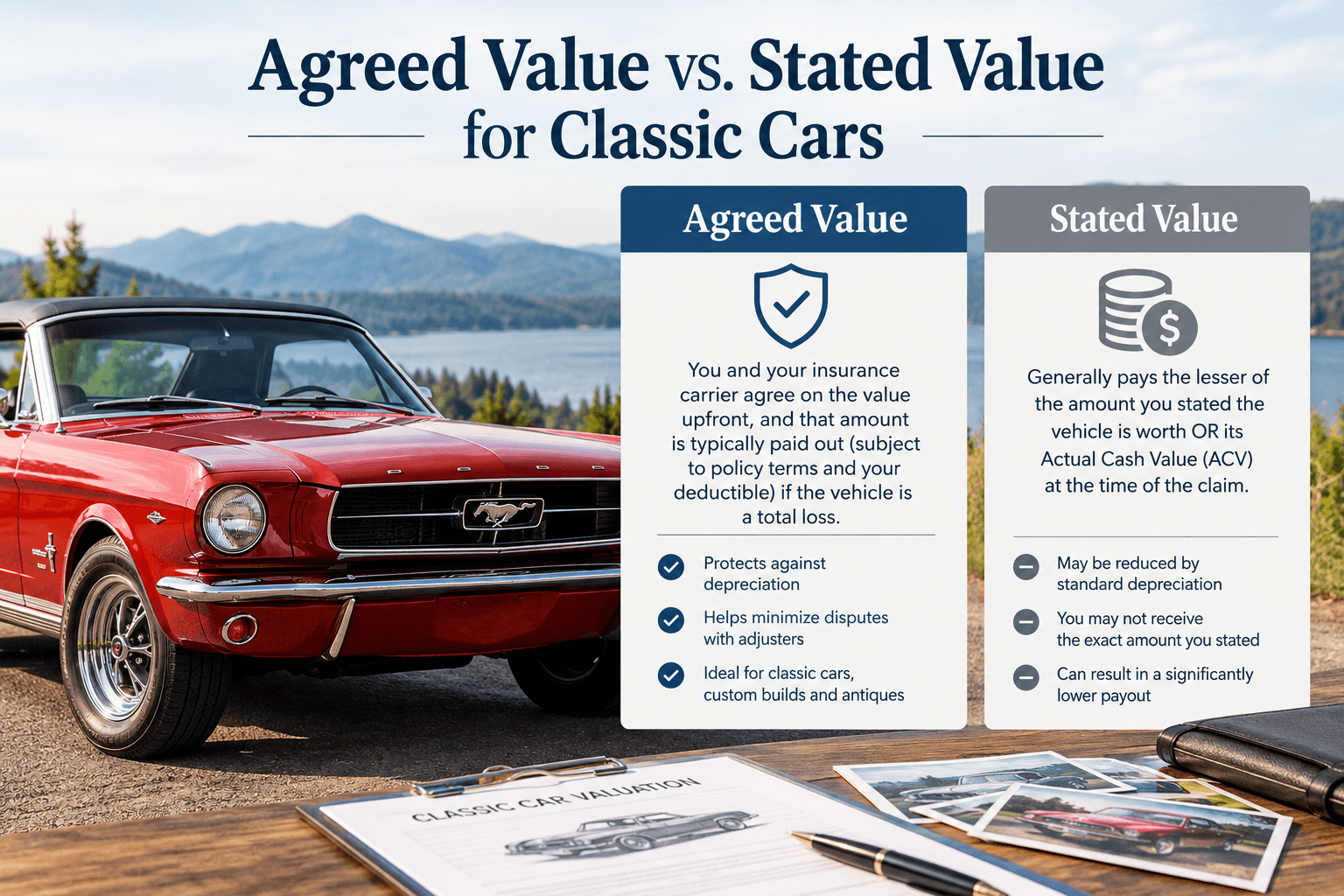
Agreed value is an insurance policy where you and your insurance carrier establish the value of your classic car upfront, and that amount is typically paid out (subject to policy terms and minus your deductible) if the vehicle is deemed a total loss.
Because classic cars may appreciate in value or feature extensive custom restoration work, an agreed value policy can help protect against standard vehicle depreciation. A properly documented agreed value policy often helps minimize disputes with adjusters after a serious loss, especially when restoration quality or rare options are involved.
What is Stated Value?
Stated value is an insurance policy that generally pays the lesser of the amount you stated the vehicle is worth OR its Actual Cash Value (ACV) at the time of the claim.
This can be a point of confusion for classic car owners. People sometimes assume "stated value" means they will receive the exact value they stated. In reality, the insurer may still apply standard depreciation and ACV calculations at claim time. If the vehicle is evaluated at an amount less than your stated value, the policy may only pay the lower number, which could significantly reduce your payout.
Which Valuation is Better for Classic Cars?
Agreed value is often considered a stronger fit for classic cars, custom builds, and antiques. For North Idaho collectors, agreed value can be especially valuable because local collector markets may move quickly, and replacement vehicles can be hard to find locally.
Regardless of your policy, documentation matters. To help secure and maintain an agreed value policy, it is generally recommended to keep:
- Current photos of the vehicle (interior, exterior, engine bay, and undercarriage)
- Receipts for parts and labor
- Professional appraisal records
- Detailed notes about originality or custom upgrades
If your classic car's value increases due to market trends or a recent restoration, consider updating your file and requesting a policy review so your coverage may keep pace with the market.
Conclusion: Protect Your Classic in Coeur d'Alene
As an independent agency in Coeur d'Alene, Redman & Company Insurance compares multiple carriers—including specialty classic auto markets—to help find a valuation structure and underwriting rules that align with how you use, modify, and store your vehicle.
Don't wait until an accident to find out how your car might be valued. Call us today at 208-664-5263 or reach out online to review your current coverage options.